If you're over 40 or even the least bit interested in the side show that is American politics, you have either seen or heard of the following political commercial that only ran once:
I was reading the Society of American Archivists listserv today and one of the subscribers posted the CONELRAD ("All Things Atomic: The Golden Age of Homeland Security!") website that has methodically chronicled the history of the political commercial known as "Daisy" but officially named "Peace, Little Girl."
September 7th was the 43rd Anniversary of the airing of the "Daisy" commercial, and it is quite possibly the reason why Lyndon Johnson beat Barry Goldwater in 1964. CONELRAD chronicles the making of the political ad with documents, biographies of the admen and others, quotes from those involved, and as an added bonus, there's an interview with "Daisy" herself.
CONELRAD is the acronym (CONtrol of Electronic RADiation) given to the first radio Emergency Broadcast System, which could, at one time, be found between your 640 and 1240 AM frequencies.
By the way, this commercial aired at about the time I first came home from the orphanage. I wonder if my mother watched it with her new baby in her arms? If so, it must have been frightening.
Showing posts with label Lyndon Baines Johnson. Show all posts
Showing posts with label Lyndon Baines Johnson. Show all posts
Monday, September 10, 2007


Friday, October 07, 2005
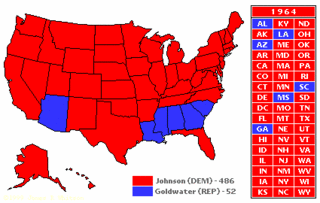
Lyndon Baines Johnson won in 1964
Let us start off with an exploration of my year of birth by talking a bit about Lyndon Baines Johnson.
 Though I was born in 1964, I wasn't very cognizant of what was happening during the year. It might be that I had just been born. In March. Though I didn't get out of the orphanage until September 1964. But we'll talk about that a little later.
The last year of the Baby Boomers found us having just gone through a rough 1963, I'm told. Folks were walking around in a daze after suffering from the assasination of President John F. Kennedy on Nov. 24, 1963, the day after Doctor Who premiered on the BBC in the United Kingdom. So, one day you have a far-reaching, mindbending telly program happening in the U.K., and the next day, the somewhat liberal, and future-thinking President is getting murdered in the U.S on the telly. As things in life go, this little metaphor actually defines the forty+ years that follows it: brave steps in the mind's imagination juxtaposed against many steps backward in the political life of the imagination. And both played out on the telly as well.
And then we head into the Johnson years, beginning in 1960 when he became Vice-President, but starting really in 1964, when he won the Presidency in his own right against Goldwater.
Oy.
Both good and bad times the Johnson years were. They were very turbulent, as the country was literally wrassling with itself about the direction in which it would head. Into this year I was born.
Johnson did more for Negroes (called such at the time) during his Presidency since Truman's integration of the military in 1948, possibly Roosevelt's New Deal in certain respects, and certainly, Lincoln's freeing of the slaves. As my African-American adoptive parents can tell you, being black in America was not an easy proposition. At least Johnson did right, mostly, for blacks and the poor. He did try. He left behind his Dixiecrat roots and dared to move forward.
But then there's the other side of his legacy. The Vietnam War, inherited from the French and Kennedy, and brimmng with America's obsession toward Communism. And that was the worse shit ever.
But in 1964, I didn't know any of this. I was born in March and didn't leave the orphanage until September. But I wouldn't find out about any of that until 1996.
 Though I was born in 1964, I wasn't very cognizant of what was happening during the year. It might be that I had just been born. In March. Though I didn't get out of the orphanage until September 1964. But we'll talk about that a little later.
The last year of the Baby Boomers found us having just gone through a rough 1963, I'm told. Folks were walking around in a daze after suffering from the assasination of President John F. Kennedy on Nov. 24, 1963, the day after Doctor Who premiered on the BBC in the United Kingdom. So, one day you have a far-reaching, mindbending telly program happening in the U.K., and the next day, the somewhat liberal, and future-thinking President is getting murdered in the U.S on the telly. As things in life go, this little metaphor actually defines the forty+ years that follows it: brave steps in the mind's imagination juxtaposed against many steps backward in the political life of the imagination. And both played out on the telly as well.
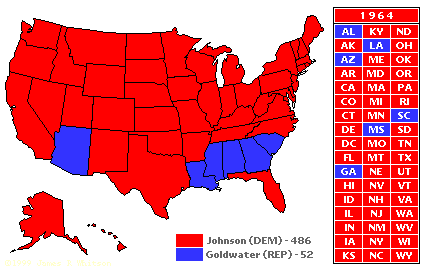
And then we head into the Johnson years, beginning in 1960 when he became Vice-President, but starting really in 1964, when he won the Presidency in his own right against Goldwater.
Oy.
Both good and bad times the Johnson years were. They were very turbulent, as the country was literally wrassling with itself about the direction in which it would head. Into this year I was born.
Johnson did more for Negroes (called such at the time) during his Presidency since Truman's integration of the military in 1948, possibly Roosevelt's New Deal in certain respects, and certainly, Lincoln's freeing of the slaves. As my African-American adoptive parents can tell you, being black in America was not an easy proposition. At least Johnson did right, mostly, for blacks and the poor. He did try. He left behind his Dixiecrat roots and dared to move forward.
But then there's the other side of his legacy. The Vietnam War, inherited from the French and Kennedy, and brimmng with America's obsession toward Communism. And that was the worse shit ever.
But in 1964, I didn't know any of this. I was born in March and didn't leave the orphanage until September. But I wouldn't find out about any of that until 1996.
Subscribe to:
Posts (Atom)